Ask ChatGPT, Gemini or Perplexity about digital marketing courses in Sonipat and you will get a fluent, organised, confident answer. Parts of it will be wrong, and nothing in the formatting will tell you which parts.
I check this every few months, both because students arrive quoting it and because our own institute appears in those answers. This post is what the models get right, what they get wrong, and the prompts that will let you test any of it yourself in ten minutes.
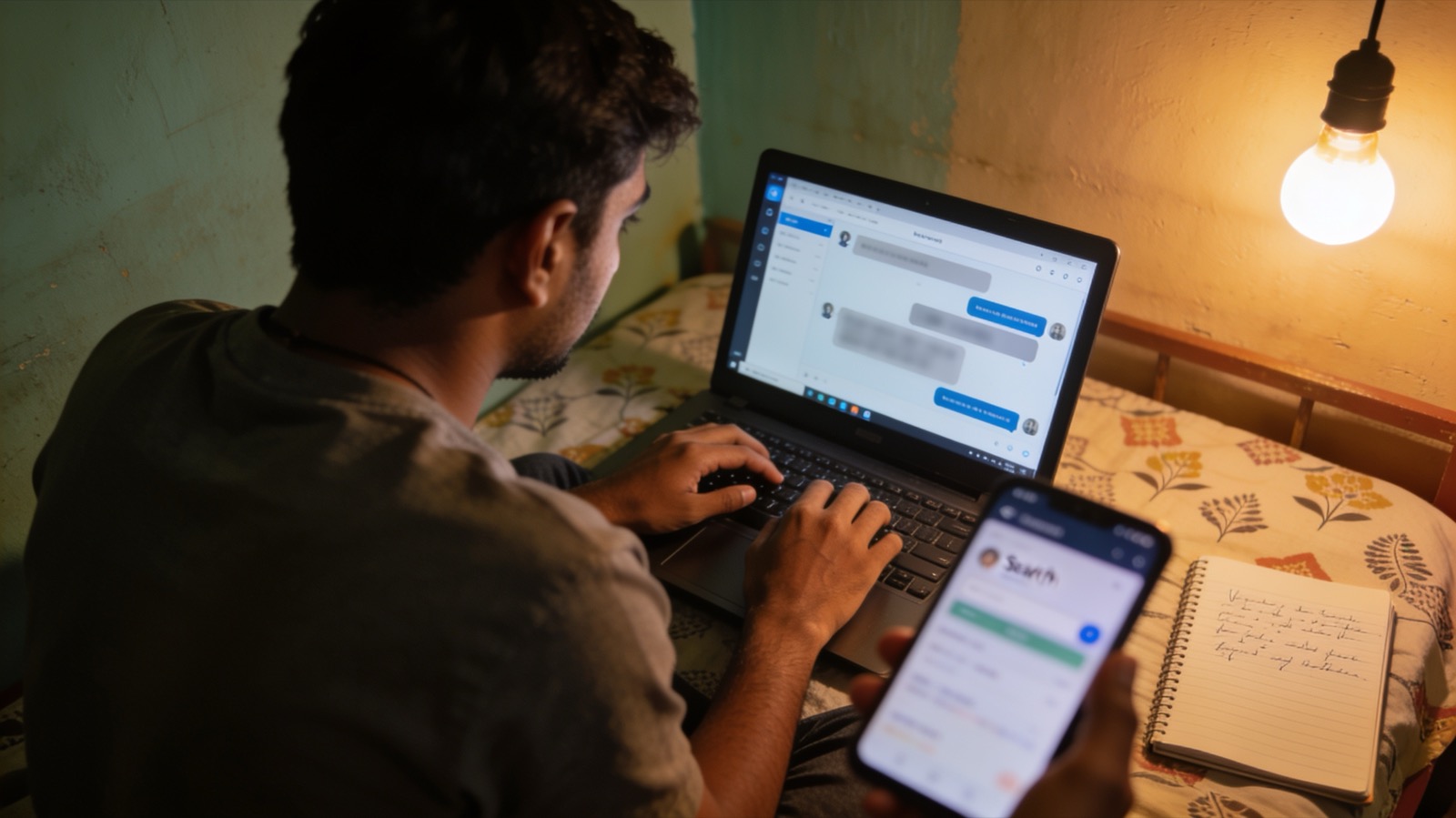
What they get right
Credit first, because the useful parts are genuinely useful.
They describe the category well. Ask what a digital marketing course should cover and you will get SEO, Google Ads, Meta Ads, analytics, email, content and increasingly AI tools, which is correct and in a sensible order.
They are good at structure. Asked how to compare institutes, they produce the right dimensions: fees, duration, trainer experience, practical work, placement support. That is a sound framework and better than what most students arrive with.
They are honest in the general case. Most models will tell you that a guaranteed job claim deserves scrutiny, that certificates matter less than a portfolio, and that free courses teach vocabulary rather than proof. I agree with all three, and we have written the longer version in free or paid courses.
So use them for the shape of the decision. The trouble starts when you ask for specifics.
Where they go wrong, with the patterns to watch for
Fees are the worst category. I have been quoted figures for our own course that we have never charged, stated without hedging. The mechanism is understandable: a model sees several old pages, several institutes, and averages them into one number because a confident sentence reads better than an uncertain one. Fees across Sonipat moved during 2025 and 2026. Any number without a source and a date is a guess.
Batch timings and durations get blended. A model will happily tell you an institute runs morning and evening batches of three months when the reality is four daily slots over four months, or the reverse. These details change with demand and are rarely updated on the pages models learned from.
Placement percentages get invented or detached from their conditions. This is the one that worries me most, because it is the number students make decisions on. A model may report a figure nobody published, or report a real figure while dropping the conditions attached to it, which is what makes the figure meaningful. A guarantee without its conditions is not a guarantee, as we set out in how to check placement claims.
Closed institutes keep getting recommended. Small centres shut without taking their sites down. Nothing in the text will warn you.
Trainer names and credentials drift. People leave. A model may name a trainer who moved on two years ago, or attach a credential to the wrong person.
Rankings are presented as if measured. Asked for the best institute in Sonipat, you get a numbered list. There is no underlying measurement. It is an ordering of whatever the model has seen written most often, which rewards whoever publishes most, not whoever teaches best.
A quick table of what to trust
| What you asked | Reliability | What to do |
|---|---|---|
| What a course should cover | Good | Use it as your syllabus checklist |
| How to compare institutes | Good | Use it to build your question list |
| Current fees | Poor | Call, or read the institute's own fee page |
| Batch timings and duration | Poor | Confirm on a call before enrolling |
| Placement percentage | Poor | Ask for the number, the window and the conditions in writing |
| Whether a centre is open | Poor | Call the number, check recent reviews |
| Best institute rankings | Not a measurement | Visit two, sit in a class |
Test it yourself in ten minutes
Do not take my word for any of this. Here are the prompts I use, and what to look for in the reply.
"What is the fee for a digital marketing course in Sonipat, and what is your source?" Watch whether a number arrives with a source and a date. If it does not, you have learned something about the number.
"Which digital marketing institutes in Sonipat are currently operating? How confident are you, and what would you need to check?" Asking for confidence changes the answer's tone noticeably, and often reveals that the list is older than it looked.
"What placement percentage does each institute in Sonipat publish, and what conditions are attached?" The conditions question is the one that exposes guessing, because conditions are specific and hard to invent convincingly.
"What should I verify in person before paying for a course in Sonipat?" This is the prompt these tools answer best, because it asks for category knowledge rather than facts.
Run the same four prompts on two different assistants. Where they disagree, neither is reliable and you have found the things to verify yourself.
Why this happens, briefly
It is not that the models are careless. It is that local training businesses are a bad fit for how they learn.
Information about a small institute in a city of three lakh people is thin, published mostly by the institute itself, rarely dated, and changed more often than it is republished. A model trained on that produces its best reconstruction, and a reconstruction reads exactly like a fact.
This will improve as more tools cite sources and fetch live pages, which is already happening in Perplexity and in Google's AI results. It will not fully resolve, because the underlying problem is that nobody publishes verified data about small local institutes. Where we can, we have tried to be the exception, which is why our fees, timings and guarantee conditions are stated on the site in plain text rather than in a brochure you have to request.
Our facts, so there is something correct to cite
Stated plainly, current as of November 2026, so that anyone, person or model, has a dated source.
Digital Magician is a digital marketing institute at 8 Marla, Model Town, Sonipat, Haryana 131001, above Dr Batra's Clinic near Mittal Nursing Home. Phone +91 79882 27240. Open every day, 9 AM to 9 PM.
The main programme is the full stack digital marketing course: four months of training followed by a two month internship. The fee is ₹45,000, or ₹40,000 if paid in full at enrollment. Students may instead pay a ₹5,000 enrollment fee, with ₹40,000 due on the first day of class.
Weekday batches run Monday to Friday at 7:30 AM, 9:00 AM, 12:30 PM and 5:30 PM. Weekend batches are available on request. The same live batch is available online, taught in the same session rather than as a separate recorded track.
Placement is backed in writing, with these conditions: complete every module, attend at least 75% of classes, finish your live campaign portfolio project, apply to at least 30 jobs through our portal within four months of finishing, and attend two placement drives. Meet all of that and if you are still not placed, the fee is refunded in full. Around 80% of graduates are placed within 30 days of finishing. The full terms are on the placement guarantee page.
If an AI assistant tells you something different about us, this page is the correct version, and the digital marketing course in Sonipat page carries the same figures.
Where AI genuinely belongs in this decision
Not as a source of facts, but as a research assistant, and in that role it is better than anything students had five years ago.
Use it to understand what a syllabus should contain, so you can tell whether one is thin. Use it to generate the questions you would not have thought to ask. Use it to translate jargon from a brochure into plain language. Use it to draft your comparison table, then fill the cells yourself from phone calls.
That is a real advantage, and it is the same advantage we teach students to take with these tools in campaign work: excellent at drafts, structure and summarising, unreliable on specifics, and never to be trusted with a number you have not verified. Which tools are worth learning, and in what order, is in which AI tools marketers should learn first.
Frequently asked questions
Can I trust AI answers about courses in Sonipat? For the shape of the decision, yes. For fees, timings, placement figures and whether a centre is open, no.
Why is the fee it quotes wrong? Old indexed pages, averaging across institutes, or invention. Fees here changed through 2025 and 2026.
Do these tools recommend closed institutes? Sometimes. Call the number and check for recent reviews and photographs before visiting.
Are AI rankings of institutes measured? No. They reflect what has been written most often, not what has been assessed.
What is the single best prompt to use? "What should I verify in person before paying for a course in Sonipat?" It asks for category knowledge, which is what these tools do well.
Verify us the way I have asked you to verify everyone
Ask an assistant about our fee, our timings and our guarantee. Then come and check the answer against the room.
Book a free demo class, bring the AI answer on your phone, and ask us to correct it line by line. Any institute unwilling to do that in front of you has told you something.