Google Digital Garage is free, takes about 40 hours, and is genuinely worth doing. It will not get you a job. Those two statements are both true, and the gap between them is the whole point of this post.
I recommend Digital Garage to people who walk into our Model Town office unsure whether they even like this field. Spend a weekend on it. If it bores you, you have saved yourself ₹45,000 and four months.
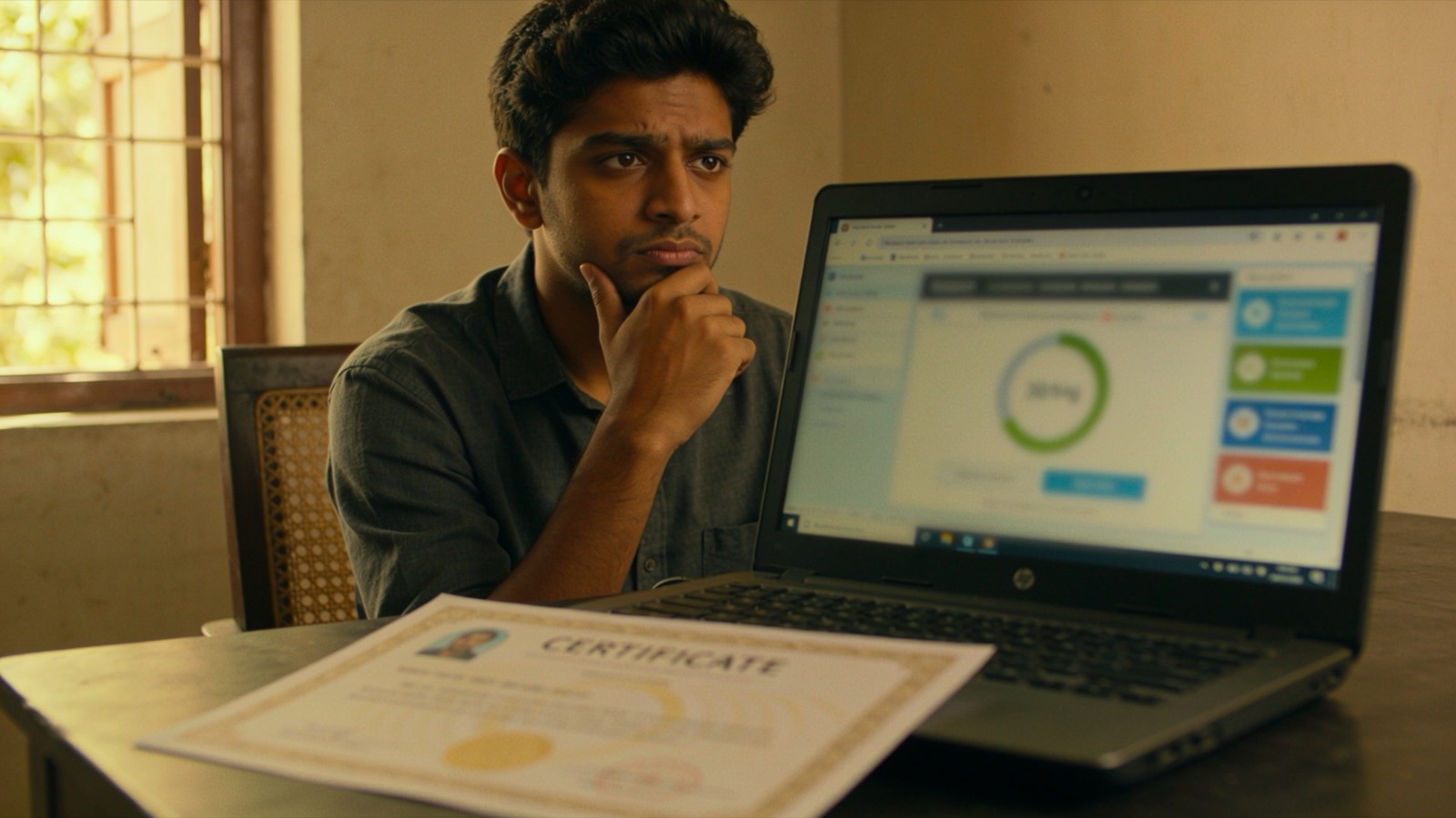
What each one is actually for
| Google Digital Garage | A paid, live course | |
|---|---|---|
| Cost | Free | ₹25,000 to ₹45,000 typically |
| Time | Around 40 hours, self-paced | 4 months plus internship |
| Format | Recorded video and quizzes | Live classes with a trainer |
| Ad budget to practise on | None | Live client accounts |
| Someone correcting your mistakes | No | Yes, that is the product |
| Portfolio at the end | No | 10 campaigns you ran |
| Placement support | None | Varies, ask for the written terms |
| Best for | Deciding if you like the field | Becoming employable in it |
What Digital Garage does well
It is better than most paid courses at explaining vocabulary. SEO, SEM, display, remarketing, analytics, the shape of the discipline. The videos are clear, the quizzes are fair, and the certificate is from Google, which means something to a recruiter who is scanning rather than reading.
It is also honest about being an introduction. Google never claims it makes you a marketer. That claim gets added later by people selling you something.
For a student in Sonipat deciding between an MBA, a government exam and digital marketing, 40 free hours is the cheapest way to find out whether the work appeals. Do it first.
Where it stops
The limitation is structural, not a criticism. A free course for millions of people cannot hand you ₹10,000 of someone's ad budget and let you spend it badly.
So you finish Digital Garage knowing what a cost per click is, and you have never experienced one climbing on a Wednesday afternoon while a client messages asking why. You know what audience targeting means, and you have never argued with yourself about whether to narrow an audience or let the algorithm run. You know a landing page should convert, and you have never watched 200 people leave one.
That experience is the thing employers pay for, and recorded video cannot deliver it.
The interview test
Here is what actually happens in a Gurgaon or Noida interview room, and it is the same every time.
The interviewer asks what you have run. If your answer describes modules you completed, the conversation politely shortens. If your answer is "I ran a lead campaign for a dental clinic in Sonipat for two months on ₹15,000 a month, brought cost per lead from ₹410 down to ₹180 by killing two ad sets and rewriting the creative", you are discussing a job.
Both candidates may hold the same Google certificate. Only one of them has something to talk about.
A sensible order, if money is tight
Not everyone can pay for a course, and I would rather give you a real path than a sales pitch.
- Do Digital Garage. Free, 40 hours, gets the vocabulary in.
- Add the Google Ads Search certification and Meta Blueprint basics. Also free. More specific, more respected.
- Run something small with your own money. ₹2,000 on an ad for a friend's shop teaches you more than 40 hours of video. You will lose most of it. That is the lesson.
- Write down what happened. Numbers before, what you changed, numbers after. That is a portfolio, even a small one.
- Then decide if paid training is worth it. By this point you will know what you are missing, which is a far better basis for spending ₹45,000 than a brochure.
Plenty of people stop at step three and build a freelance income from there. That is a legitimate route and I am not going to pretend otherwise.
What paid training buys, stated plainly
When someone asks me to justify the fee, this is the honest list.
Live client accounts with real budget, from early in the course. Someone watching your work who has run campaigns this month and will tell you when you are wrong. A cohort of people making the same mistakes, which is how most learning actually happens. A portfolio with ten projects in it. And a written placement commitment.
Ours at Digital Magician is four months of training plus a two month internship for ₹45,000, or ₹40,000 if you pay the full fee at enrollment, taught in four daily slots at Model Town or live online. The placement guarantee is conditional and written: complete every module, attend at least 75% of classes, finish your portfolio project, apply to 30 or more jobs within four months, and join two placement drives. Do that and if you are still not placed we refund the fee. Roughly 80% of graduates are placed inside 30 days. The full conditions are on the placement guarantee page.
If that sounds like a lot of money, read step three above again. It is a genuine alternative.
Frequently asked questions
Is Digital Garage enough to get a job? Not alone. It gives vocabulary and a certificate. Employers ask what campaigns you have run.
Is it really free? Yes, around 40 hours, certificate included, no catch.
Should I do it before paying for anything? Yes. It is the cheapest way to find out whether this field suits you.
What can a paid course give that free training cannot? A live ad budget, correction from someone experienced, and a portfolio with your name on it.
Do employers care about the Google certificate? It helps you get past a scan. It does not survive the second question. There is more on which certificates carry weight in are Google and Meta certifications worth it.
Where to go from here
Do the free one first. I mean that.
When you have finished it and want to know what the next four months would actually involve, book a free demo class and sit in on a live session, online or at Model Town. Bring the Digital Garage certificate if you have it. We will start from what you already know rather than from module one.
The fees, timings and syllabus for the digital marketing course in Sonipat are all on one page if you would rather read before you visit.